How much does commercial roof replacement actually cost in Tipton?
For most flat and low slope commercial roofs in Tipton, replacement runs between $7 and $14 per square foot installed, depending on the membrane, insulation thickness, and deck condition. A 20,000 square foot warehouse with a single ply TPO system typically lands in the $150,000 to $240,000 range. A smaller retail strip at 6,000 square feet might fall between $48,000 and $85,000. Metal retrofit systems push higher, often $12 to $22 per square foot. These are honest ballparks, not bids. The real number depends on what we find under the old roof, which is why we never quote firm pricing without an on site measurement and core sample.
What drives the price up or down?
Five things move the budget more than anything else: square footage, membrane type, insulation R-value, deck repairs, and access. A clean tear off on a single story building with ground level parking is cheaper than a crane lift over an occupied office. Code in Tipton now requires higher R-values than older buildings carry, so you often add two to three inches of polyiso, which is roughly $1.50 to $2.50 per square foot on its own. If we find wet insulation or rusted metal deck once the membrane is up, change orders follow. For a deeper comparison of systems, our piece on TPO vs EPDM vs PVC breaks down the cost per square foot and lifespan tradeoffs.
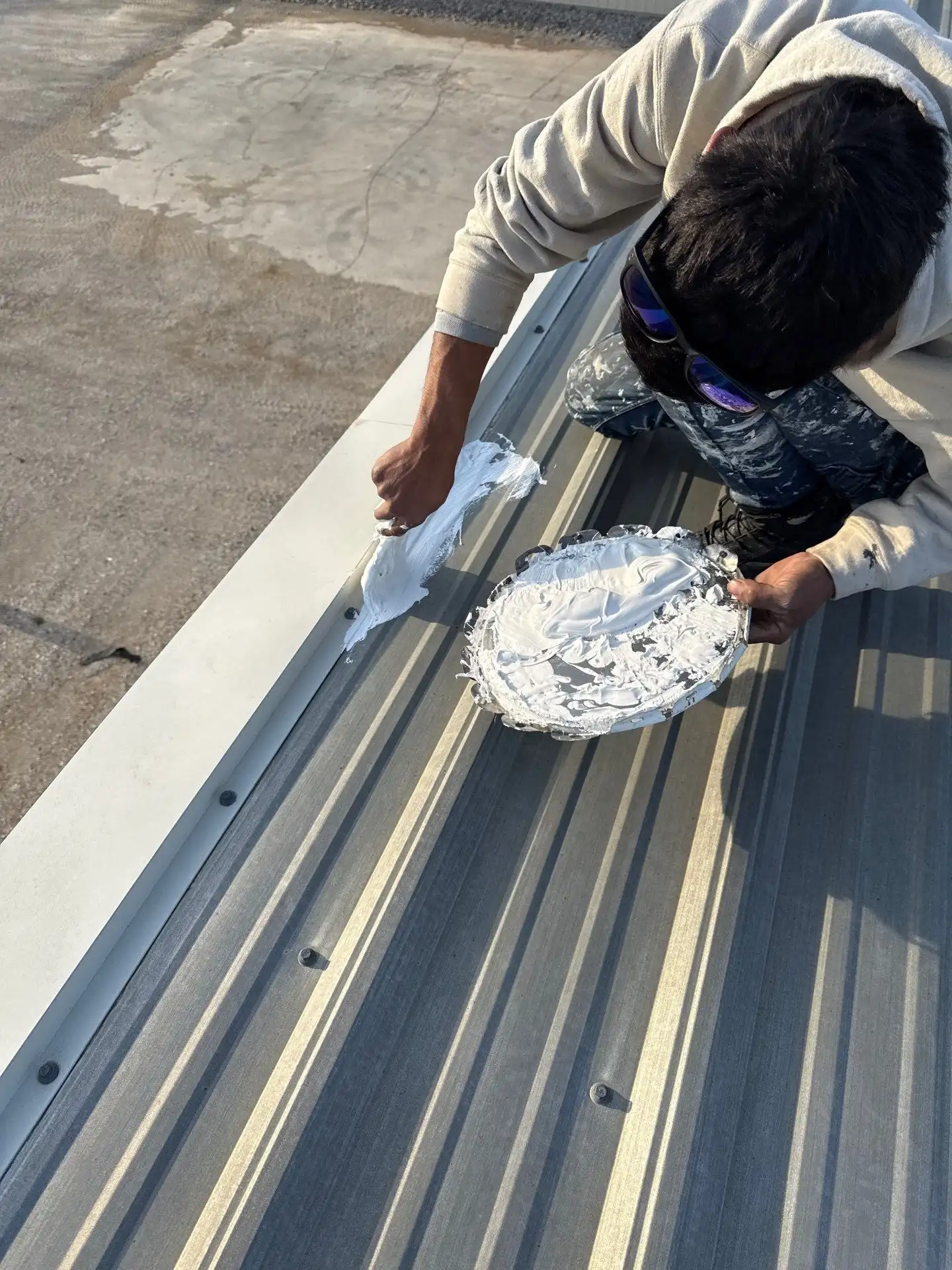
Penetrations also matter more than most owners expect. Every rooftop unit, vent stack, drain, skylight, and conduit run is a flashing detail, and flashing labor is some of the most expensive square footage on the roof. A clean rectangle with two drains is cheap to install. A roof crowded with twenty HVAC curbs, exhaust fans, and a satellite array can add 10 to 15 percent to the labor line. Edge metal, parapet height, and the condition of existing coping all factor in as well.
Can the building stay open during the work?
Yes, in almost every case. We sequence tear off in sections that match the daily install capacity so there is never exposed deck overnight unless weather is clear and dry in is in place. Noise is the bigger disruption. Fastener guns over a conference room are loud, so we coordinate the worst phases with your operations schedule. Loading dock access, employee parking, and HVAC curb work are mapped in a pre construction meeting before crews arrive. For schools, medical offices, and food service tenants, we have phased work into evenings and weekends to keep daytime operations untouched, though off hours labor adds roughly 15 to 25 percent to that portion of the project.
Should we consider repair or coating instead?
Sometimes, yes. A roof with 70 percent of its useful life remaining and isolated leaks is usually a repair candidate, not a replacement. A roof that is dry but aging may be a coating candidate, which extends life 10 to 15 years at roughly 40 to 60 percent of replacement cost. A roof with widespread saturation, multiple failed seams, or a compromised deck is a replacement, full stop. Our guide on when to coat vs replace your commercial roof walks through the decision points with real moisture survey examples.
What about insurance and storm damage?
If hail or wind triggered the replacement conversation, document everything before the adjuster arrives. Date stamped photos, interior leak locations, and a third party inspection report carry weight. We provide line item scopes that match insurance estimating software so your carrier sees an apples to apples comparison. Deductibles on commercial policies in Tipton often run 1 to 2 percent of insured value, which on a $2 million building is $20,000 to $40,000 out of pocket. Know your number before you file. Also check whether your policy is replacement cost or actual cash value, because an ACV settlement on a 20 year old roof can leave a six figure gap between the check and the actual job cost.
What does a realistic schedule look like by phase?
Inspection and proposal usually take three to seven days from the first call, including the on site measurement, core sampling, and a written scope. Permitting and material staging in Tipton typically run one to two weeks, with TPO and PVC in stock locally and specialty colors or thicker insulation sometimes pushing four weeks. Tear off and install is the most visible phase at three to fifteen working days depending on square footage and crew size. Flashings, terminations, and the final punch list close the job in two to four days. These ranges reflect typical Central Indiana conditions and weather windows, and we share a working calendar at contract signing so your team can plan deliveries, tenant notices, and HVAC service around the roof crew.
What warranty should we expect?
Manufacturer membrane warranties run 15, 20, or 30 years depending on the system and thickness. Workmanship warranties from the installer are typically 2 to 10 years. Read both. A 30 year membrane warranty is meaningless if the flashings and penetrations are not covered, and most leaks start at penetrations, not in the field. Ask whether the warranty is material only or a full system NDL (no dollar limit) warranty, and confirm what annual maintenance is required to keep coverage active. Most manufacturers want a documented inspection once or twice a year, and skipping it can void the warranty long before the membrane fails.
What happens if we find leaks or damage mid project?
This is where honesty matters. Once the old membrane is off, we sometimes uncover saturated insulation, deteriorated decking, or hidden leak paths that did not show on the pre job survey. You will get a photo, a measurement, and a change order priced before we proceed. If the damage is small, we absorb minor repairs. If it is structural, we stop and discuss options. Active leaks during a tear off get tarped and dried in before anything else, because water inside a building during construction is its own emergency. Our commercial emergency roof repair team handles those situations the same day they are flagged.
How do we choose the right contractor for the job?
Look for three things: manufacturer certification on the specific system being installed, a local crew that has been together more than a season, and references on buildings similar to yours. A contractor certified by GAF, Carlisle, or Johns Manville can offer the full system warranty, which a non certified installer cannot. Ask to see a recent project of comparable size in Tipton, and call that owner directly. Tipton Metal Roofing is happy to share active job sites so you can see the work in progress, talk to the foreman, and verify that what you are buying in the proposal is what shows up on the roof.
How long does the project take from signed contract to final walk?
For a typical 15,000 to 25,000 square foot single ply replacement in Tipton, plan on three to six weeks of total calendar time. That breaks down roughly as: one to two weeks for material lead time and permit, three to eight working days on the roof for tear off and install, and two to four days for flashings, terminations, and punch list. Larger buildings or phased work over occupied tenants stretch this. Weather is the wild card. Wet decks cannot be covered, so a rainy stretch in spring can add a week without anyone being at fault.